
How to Perform Hajj Step by Step
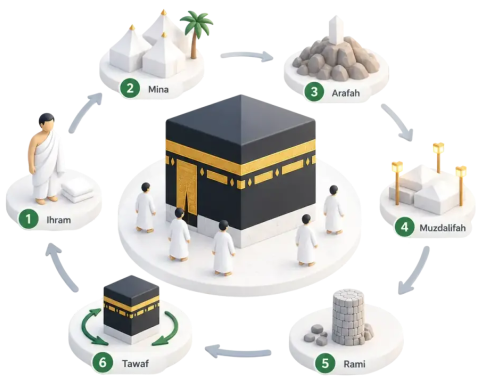
Understand what Hajj means, who it is required for and how the main pilgrimage journey moves through Ihram, Mina, Arafah, Muzdalifah, Rami and Tawaf. The page explains the learning sequence and does not replace personal religious or official travel guidance.
What Is Hajj in Islam?
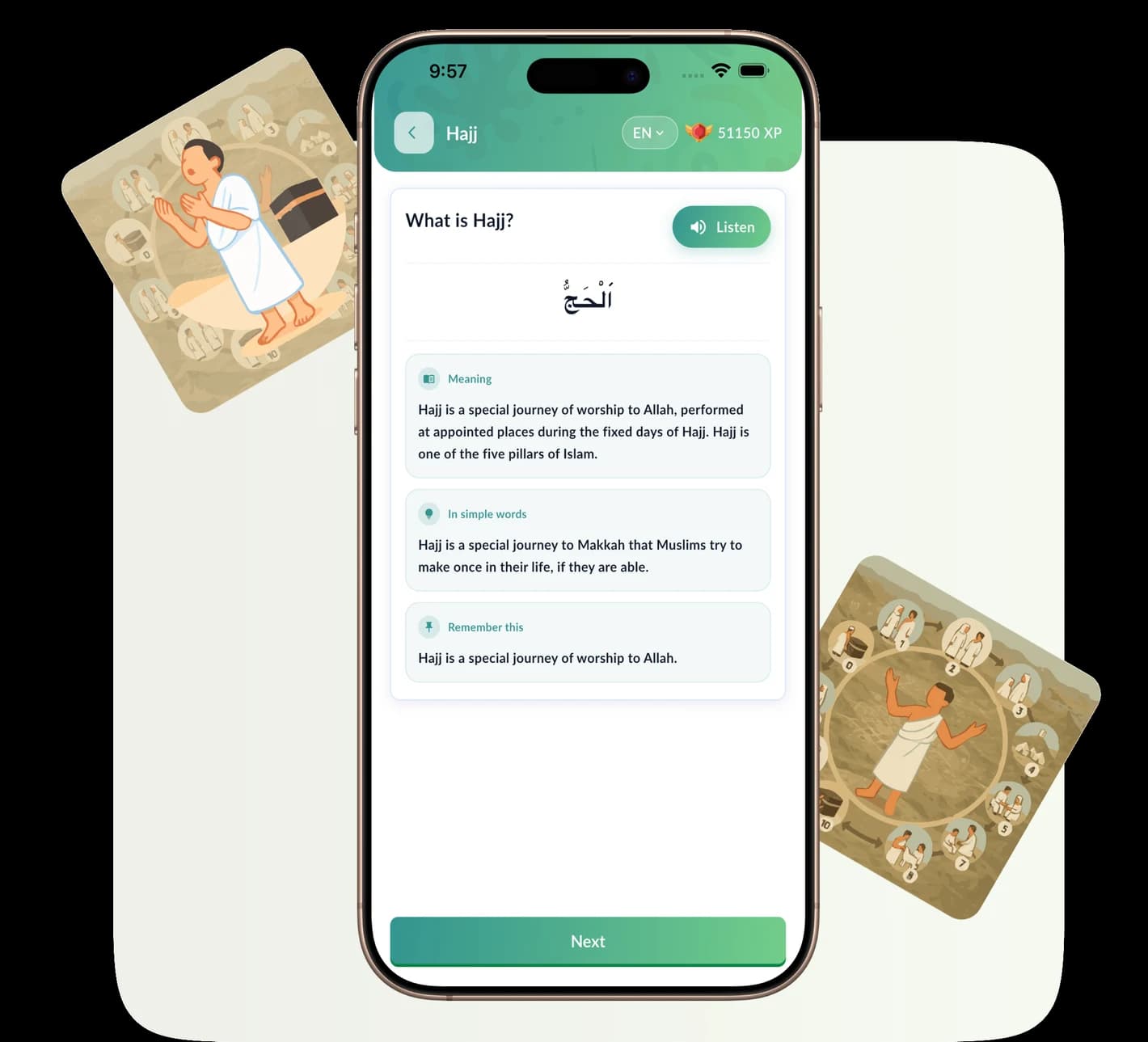
Hajj is the pilgrimage to Makkah performed during specific days of Dhul Hijjah. It is one of the Five Pillars of Islam and is required once in a lifetime for Muslims who meet the relevant conditions and have the ability to undertake the pilgrimage.
Why Is Hajj Important?
Hajj is an act of worship, obedience and devotion to Allah. The pilgrimage brings Muslims together in worship and highlights humility, patience, remembrance, gratitude and accountability.
Hajj in the Qur’an
Transliteration
Wa lillāhi 'alan-nāsi ḥijjul-bayti manis-taṭā'a ilayhi sabīlā.
Meaning Translation
And Hajj to the House is a duty owed to Allah by all people who are able to make the journey to it.
Who Is Required to Perform Hajj?
Hajj is required once in a lifetime for Muslims who meet the relevant religious conditions and are able to undertake the pilgrimage. Ability can include physical, financial and practical considerations, so personal circumstances should be checked with qualified guidance.
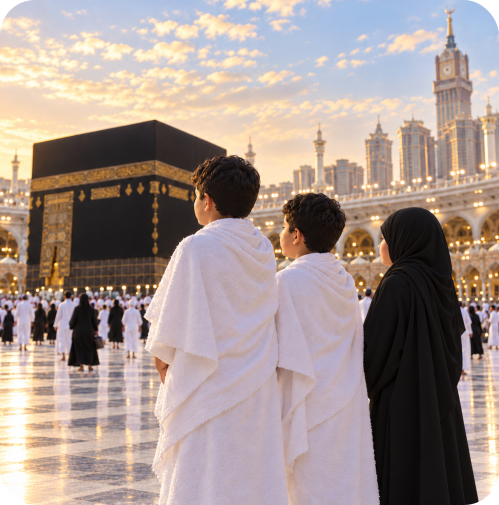
The Three Types of Hajj
Before Hajj Begins

Know Your Hajj Type
Understand whether the journey is Tamattu, Qiran or Ifrad because some details differ.

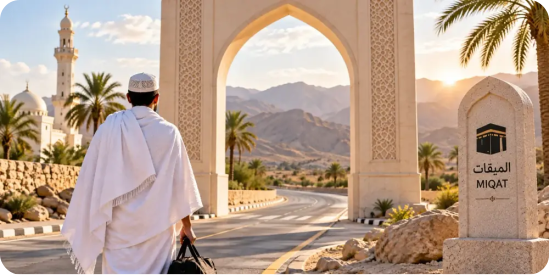
Know the Miqat
Be familiar with the boundary connected with entering Ihram for the journey.

Learn the Key Days
Understand what happens on 8, 9 and 10 Dhul Hijjah and during the Days of Tashriq.
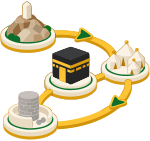
Review the Journey
See how the places and rites connect before moving into the detailed sequence.
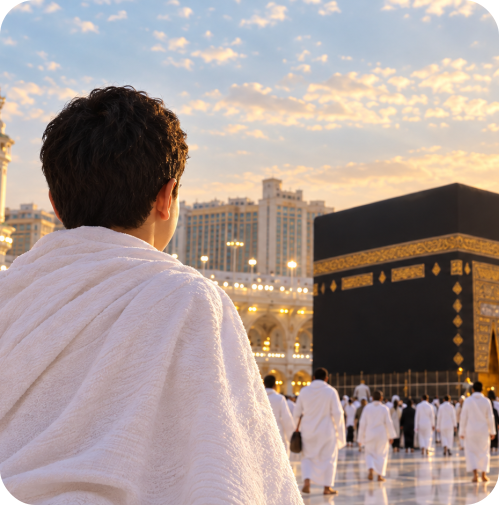
What Is Ihram?
Ihram is the sacred state entered before beginning Hajj. It marks the start of the pilgrimage journey and is connected with intention, preparation and the rules that apply while the pilgrim remains in that state.
Before Hajj Begins
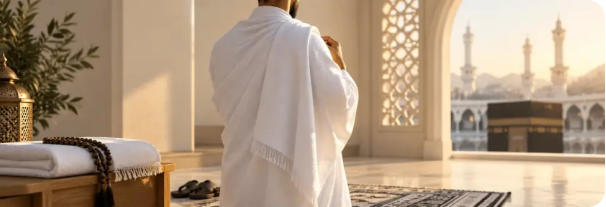

Enter Ihram
Begin the Hajj journey in the state of Ihram according to the Hajj type being performed.
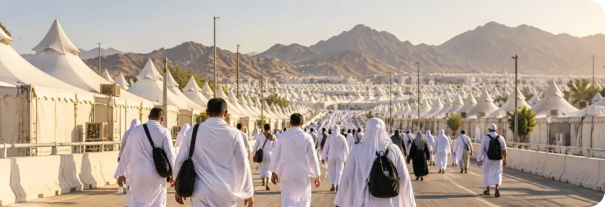

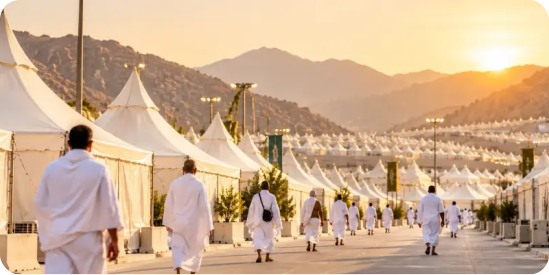
Travel to Mina
On 8 Dhul Hijjah, pilgrims travel to Mina and prepare for the next stage of Hajj.
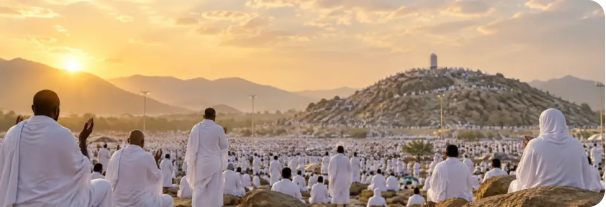

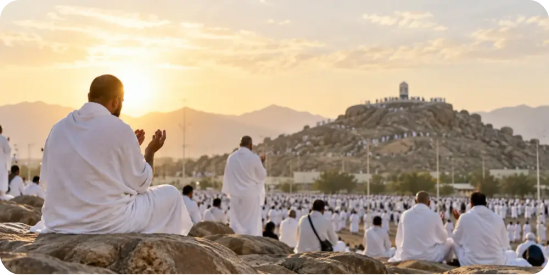
Stand at Arafah
On 9 Dhul Hijjah, pilgrims gather at Arafah for a central rite of Hajj and spend the day in worship and dua.
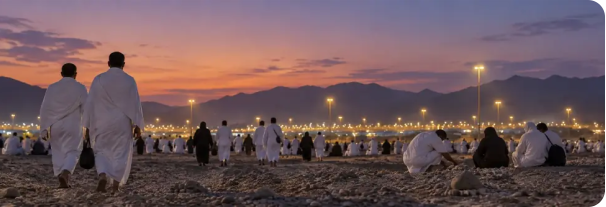
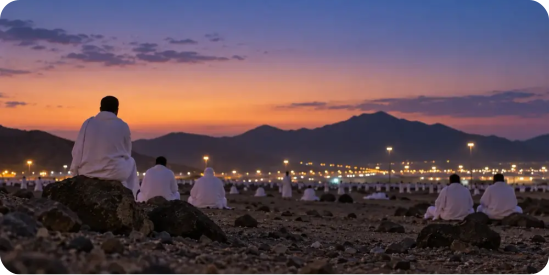
Continue to Muzdalifah
After leaving Arafah, pilgrims travel to Muzdalifah and prepare for the rites that follow.
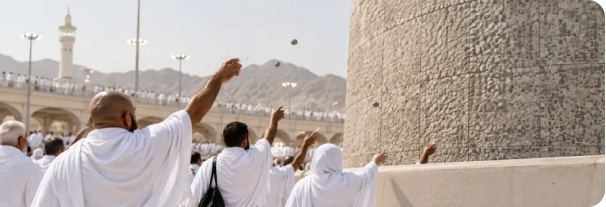
Return to Mina and Perform Rami
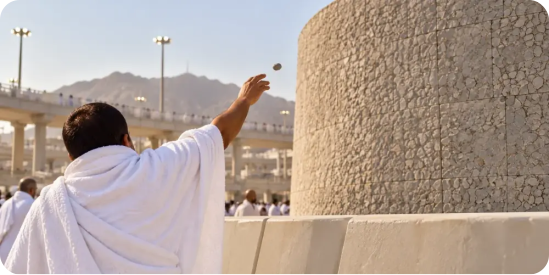
The journey continues in Mina with Rami at the Jamarat according to the Hajj sequence.
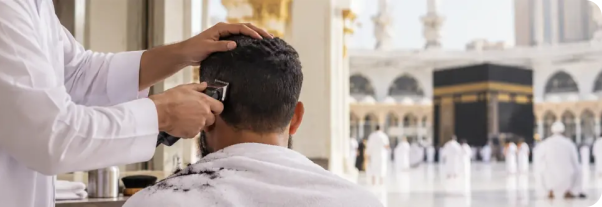
Sacrifice and Hair Cutting
Sacrifice may apply depending on the type of Hajj. Hair is then shaved or shortened as required for the relevant stage.
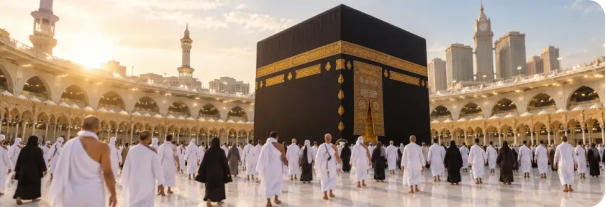
Tawaf al-Ifadah
Pilgrims return to Makkah for Tawaf al-Ifadah as part of the Hajj rites.
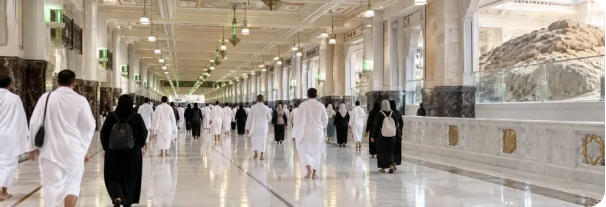
Sa'i Where Applicable
Sa'i between Safa and Marwah is completed where it applies within the pilgrim's Hajj sequence.
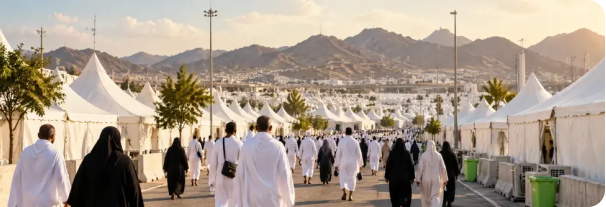
Days of Tashriq
Pilgrims return to Mina for the Days of Tashriq and continue the remaining rites.
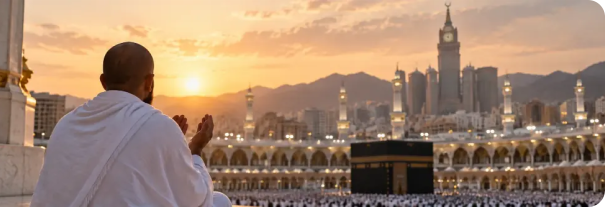
Complete the Hajj Journey
The pilgrimage concludes after the remaining required rites are completed according to the pilgrim's Hajj type.
The Key Days of Hajj
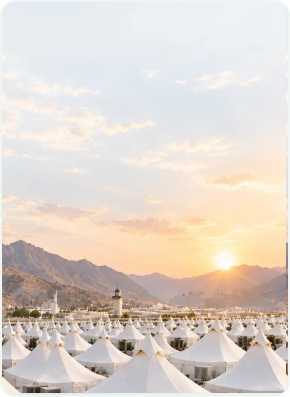
8 Dhul Hijjah
The Hajj journey moves to Mina and prepares for Arafah.
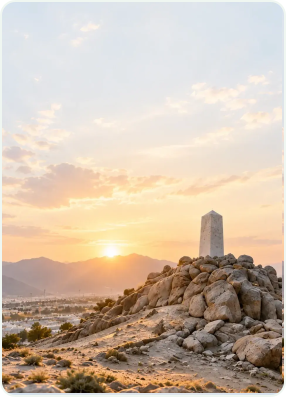
9 Dhul Hijjah
The Day of Arafah, followed by the journey to Muzdalifah after sunset.
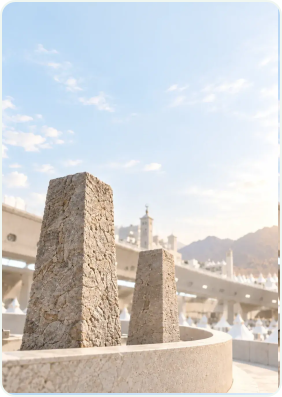
10 Dhul Hijjah
Rami, sacrifice where applicable, hair cutting and major Hajj rites continue.
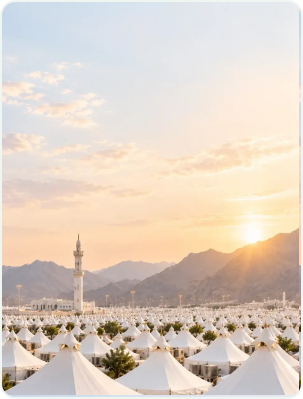
11 to 13 Dhul Hijjah
The Days of Tashriq continue in Mina with the remaining Hajj rites.
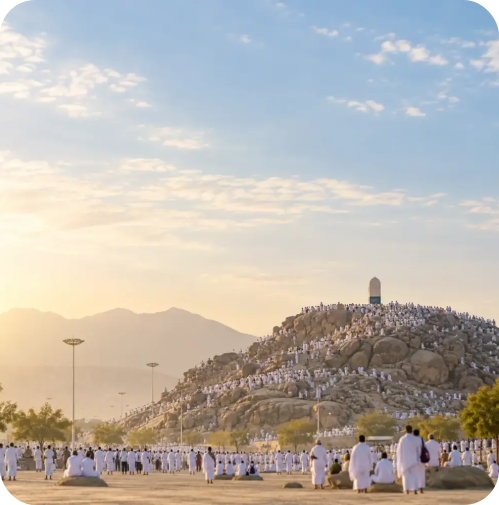
What Happens at Arafah?
Arafah takes place on 9 Dhul Hijjah and is one of the central stages of Hajj. Pilgrims gather at Arafah and spend the day in worship, remembrance and supplication before leaving after sunset.
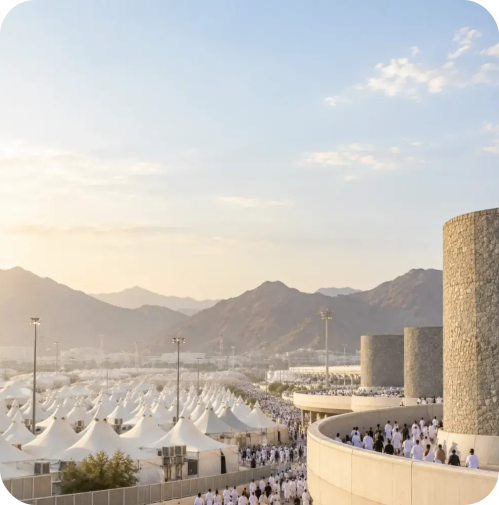
Mina, Muzdalifah and Rami
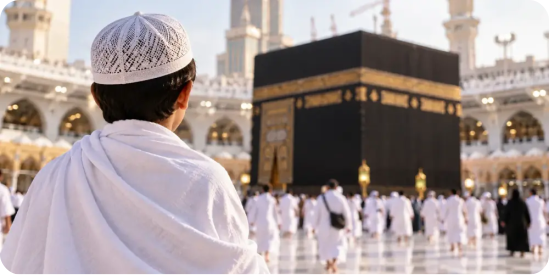
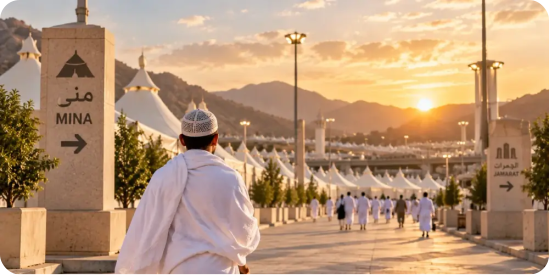
Mina and Muzdalifah are key locations in the Hajj journey. After Arafah, pilgrims continue to Muzdalifah, then return to Mina where Rami at the Jamarat forms part of the remaining Hajj rites.
Important Hajj Terms

How NorAI Helps You Learn Hajj and Umrah

See & Listen
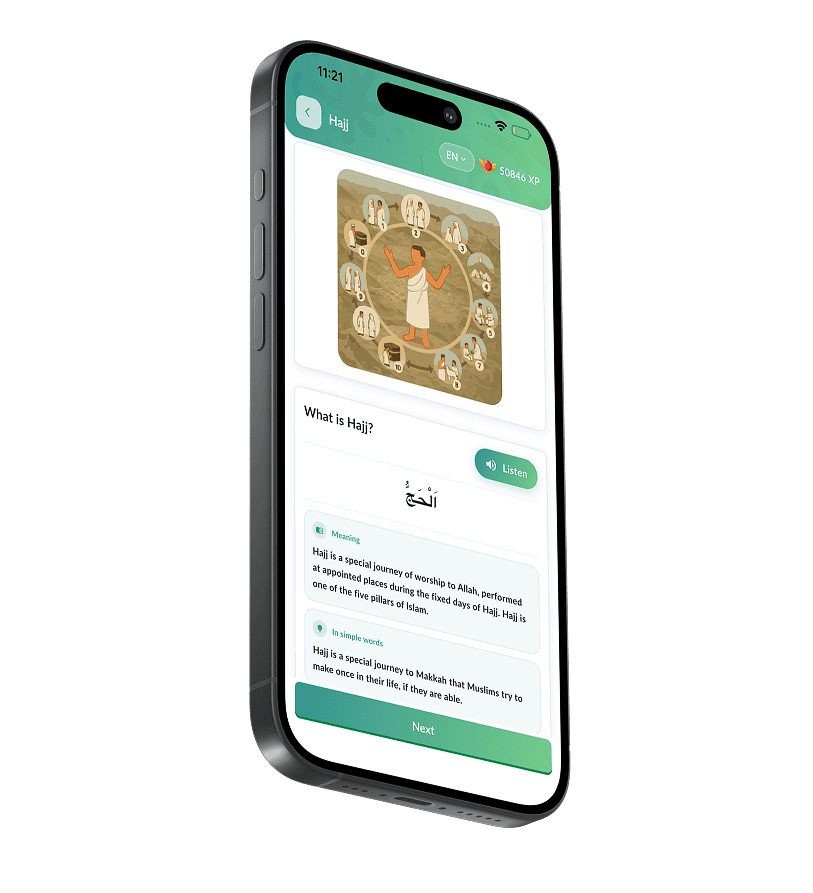
Recognise key places and stages through visual learning, with audio for supported recitations and duas.
Understand & Follow
Read short explanations to recognise each stage and follow each pilgrimage in the correct learning order.
Practise
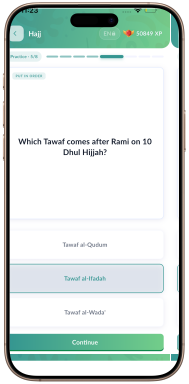
Use stage and sequence recognition to strengthen familiarity.

Review
Return to the full journey and revisit earlier stages whenever needed.
Related Islamic Learning
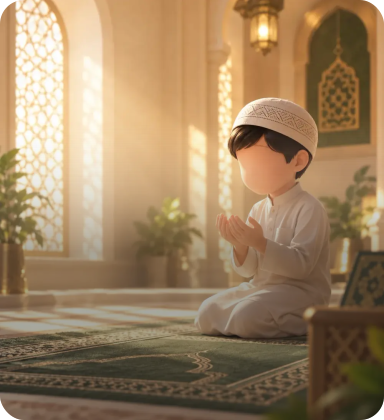
Umrah
Continue with the shorter pilgrimage journey through Ihram, Tawaf, Sa'i and completion.
Explore Umrah →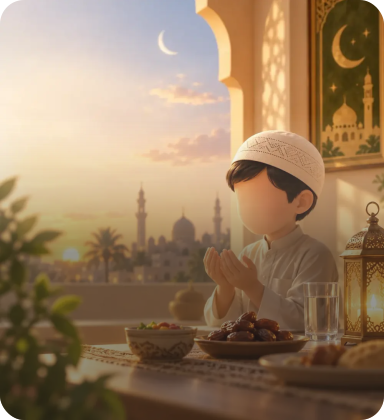
Daily Duas
Review traveller, protection and everyday duas from the Daily Duas collection.
Explore Daily Duas →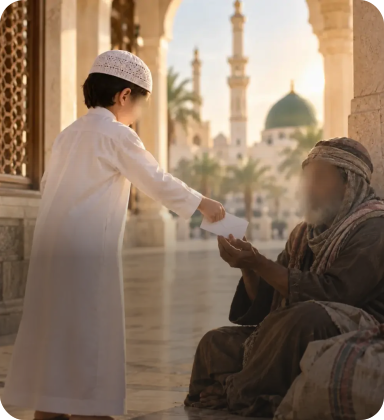
Purification
Review Wudu and Ghusl as part of wider worship learning.
Explore Purification →Common Questions About Hajj
Hajj is the pilgrimage to Makkah during specific days of Dhul Hijjah and is one of the Five Pillars of Islam.
The main Hajj rites take place during Dhul Hijjah, especially from 8 to 12 or 13 Dhul Hijjah.
On 9 Dhul Hijjah, pilgrims gather at Arafah for a central rite of Hajj and spend the day in worship, remembrance and supplication.
The commonly recognised types are Tamattu, Qiran and Ifrad. They differ in how Hajj and Umrah are combined and in some related requirements.
No. The obligatory Hajj is once in a lifetime for a Muslim who meets the relevant conditions and is able to undertake it.
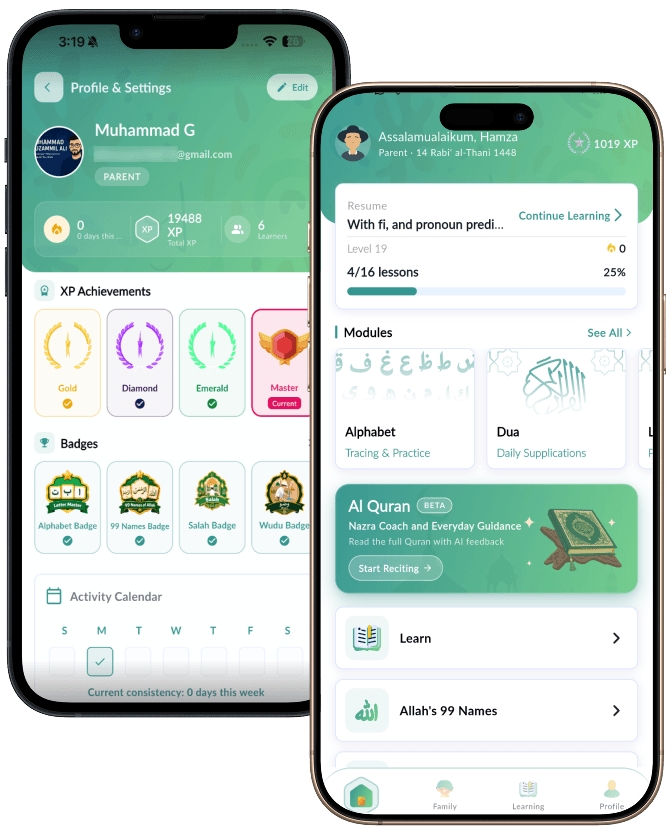
Learn Hajj Step by Step with NorAI
Follow the Hajj journey by stage, place and key day with clear visual learning designed to help beginners understand and review the pilgrimage sequence.

